Shield
Analytics
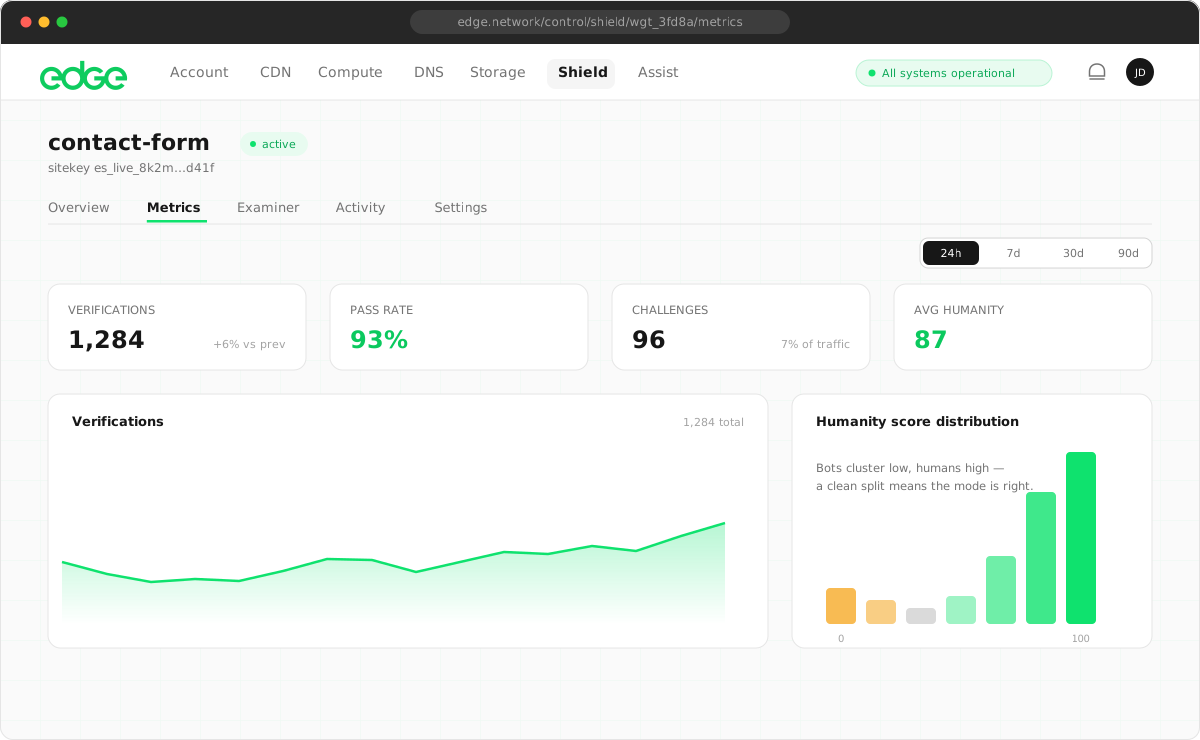
Every widget has a Metrics tab in the console with verification volumes, humanity score trends and failure counts. It is built entirely from hourly aggregates.
On this page4 sections
Available metrics#
Open Shield → your widget → Metrics and select a range (24 hours, 7 days, or 30 days):
| Metric | What it tells you |
|---|---|
| Verifications | Successful siteverify calls: traffic your server accepted a token for |
| Challenges issued | How many verification attempts started (the widget’s raw traffic) |
| Average humanity score | Score trend over time. A sudden drop is an early warning of a bot campaign |
| Solve rate | Challenges solved ÷ issued. Low rates suggest clients abandoning or failing the challenge |
| Interactive shown | How often managed mode escalated to the “I am human” confirmation |
| Failed / replayed | Rejected siteverify calls, including replay attempts. This is your token-abuse signal |
| Tarpit challenges | Escalated-difficulty challenges served to repeat offenders. Shows how hard the tarpit is working |
| Shadow would-fail / would-escalate | For widgets in shadow (report-only) mode: what strict enforcement would have rejected or escalated. This is your trial scorecard |
Reading the data#
- Average score falling while volume rises: this usually means automated traffic has arrived. Check the interactive-shown count; in managed mode it should rise with it.
- Replays above zero: something is resubmitting used tokens, typically a naive bot re-posting a captured form. Shield rejects these automatically.
- Issued far exceeding verifications: this is normal. Every page load with a widget issues a challenge, but only submitted forms reach siteverify.
Data retention and privacy#
All analytics are hourly aggregate counters per widget. Shield does not store visitor IP addresses, fingerprints, cookies, or any per-visitor records. The signals used for scoring are processed in memory during the request and discarded. There is no per-visitor drill-down because there is no per-visitor data.
This is what makes Shield GDPR/CCPA-friendly by default: there’s nothing to consent to, export, or delete.
Next steps
Something unclear or out of date? Tell us